
Singapore, Philippines Sign First Article 6 Carbon Credits Deal To Scale Climate Finance

- Singapore and the Philippines signed the Philippines’ first Article 6 Implementation Agreement during ASEAN Climate Week in Manila.
- The deal creates a legally binding framework for carbon credit generation and transfer under the Paris Agreement.
- Approved projects will direct climate finance into the Philippines, with expected benefits for jobs, energy security, pollution reduction, and local communities.
Singapore And Philippines Formalise Carbon Market Cooperation
Manila hosted a decisive step for Southeast Asia’s carbon market ambitions as Singapore and the Philippines signed a new Implementation Agreement on carbon credits collaboration under Article 6 of the Paris Agreement.
The signing took place during ASEAN Climate Week. It brings Singapore’s carbon market strategy into closer alignment with the Philippines’ climate finance needs and development priorities.
The agreement was signed by Singapore’s Minister for Sustainability and the Environment and Minister-in-charge of Trade Relations Grace Fu, and the Philippines’ Department of Environment and Natural Resources Secretary Juan Miguel T. Cuna.
For the Philippines, this is its first Implementation Agreement under Article 6. That gives the deal regional weight. It also places Manila more firmly inside the emerging system for cross-border carbon credit transfers.
For Singapore, the agreement expands its network of Article 6 partnerships. It also supports its wider plan to use international carbon credits as part of its climate strategy, while building demand for high-integrity credits across Asia.
A Legal Framework For Article 6 Credits
The agreement creates a legally binding framework for generating and transferring carbon credits from mitigation projects in the Philippines.
These projects must align with Article 6 of the Paris Agreement. They will also need to meet the relevant rulebook requirements for authorisation, accounting, and credit transfer.
Project developers will be able to use the framework to develop high-quality carbon credit projects. Details on the authorisation process and eligible carbon crediting methodologies will be published later.
That detail matters for investors and corporate buyers. Article 6 markets depend on trust, clear accounting, and host-country approval. Without those elements, credits can face questions over quality, double counting, and climate impact.
This agreement gives developers a clearer route to market. It also gives buyers a more formal structure for sourcing credits linked to national climate priorities.
RELATED ARTICLE: Bain, BMO Drive Rapid Sell-Out of Mast Carbon Removal Credits as Carbon Markets Accelerate
Climate Finance For The Philippines
The collaboration aims to channel financing toward mitigation projects that unlock additional emissions reduction potential in the Philippines.
Those projects are expected to support sustainable development. The release cited potential benefits including job creation, stronger energy security, lower environmental pollution, and direct gains for local communities.
Grace Fu said, “Singapore and the Philippines share a strong and longstanding partnership, and as fellow ASEAN Member States, are working together closely on regional and bilateral initiatives. The signing of the Implementation Agreement during ASEAN Climate Week is an important milestone in our bilateral relations. This Agreement will deepen collaboration between our two countries, channel climate finance towards impactful projects in the Philippines and unlock new opportunities in carbon markets for businesses and local communities. Together, ASEAN can lead the way in building a low-carbon future that delivers tangible benefits across the region.”

Her comments place the deal inside a larger ASEAN agenda. The region faces rising climate risk, fast energy demand growth, and a major need for transition finance. Carbon markets are not a substitute for domestic emissions cuts. However, under strict rules, they can help mobilise capital for projects that may otherwise struggle to secure funding.
Strategic Importance For ASEAN Carbon Markets
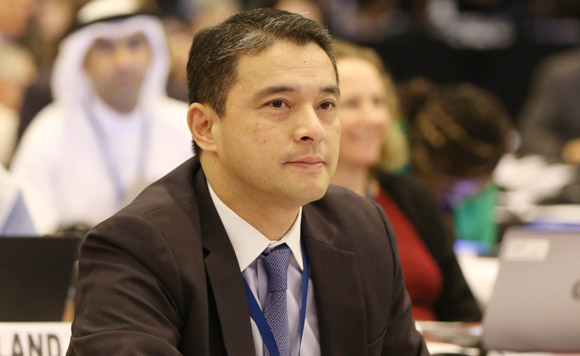
Juan Miguel T. Cuna framed the agreement as both a climate and development decision. He said, “The signing of our Implementation Agreement marks a significant step forward in our shared pursuit of a low-carbon, and climate-resilient future for our region. To our partners from Singapore: this moment reflects the completion of rigorous technical work and the strength of a partnership built on trust, transparency, and a shared ambition to operationalise high-integrity climate cooperation under the Paris Agreement. For the Philippines, entering into this Implementation Agreement under Article 6.2 is a strategic decision – one grounded in our national priorities, our development aspirations, and our commitment to global climate action.”
For C-suite leaders and investors, the governance lesson is clear. Article 6 cooperation is moving from concept to execution. Countries are now building the legal and policy rails that can support tradable credits, climate finance flows, and corporate climate strategies.
Still, execution will decide the value of the agreement. Market confidence will depend on the quality of methodologies, the strength of project authorisation, and the transparency of emissions accounting.
What Business Leaders Should Watch
The agreement could open new opportunities for project developers, carbon market intermediaries, and corporate buyers seeking credits with government-level authorisation.
It also raises the bar for due diligence. Buyers will need to assess project quality, host-country approval, sustainable development claims, and long-term climate integrity.
For the Philippines, the deal offers a route to attract private finance into mitigation projects that align with national priorities. For Singapore, it expands access to regional carbon credits and strengthens its role as a carbon services hub.
Across ASEAN, the agreement adds momentum to a more structured carbon market architecture. If implemented with high standards, it could help connect regional capital with climate action in one of the world’s most climate-exposed economic zones.

The ESG News Editorial Team is comprised of veteran financial journalists and sustainability analysts dedicated to providing real-time, objective reporting on global ESG regulations, climate finance, and corporate governance. Our desk monitors daily developments from the SEC, IFRS, CSRD and international regulatory bodies to ensure our 1M+ readers receive accurate, data-driven insights into the evolving sustainable investment landscape. Follow the ESG News Editorial Team for expert reporting on global sustainability standards, ESG disclosures, and climate policy. Access over 10,000 investigative reports and real-time updates.