Imperative Secures $91 Million To Scale South Africa Ecosystem Restoration Project
- $91 million blended finance structure combines World Bank outcome bond with private capital to scale nature-based carbon removal
- 50,000-hectare Phase 2 expansion advances one of Africa’s largest ecosystem restoration efforts
- Long-term Amazon offtake agreement provides revenue certainty to unlock institutional capital
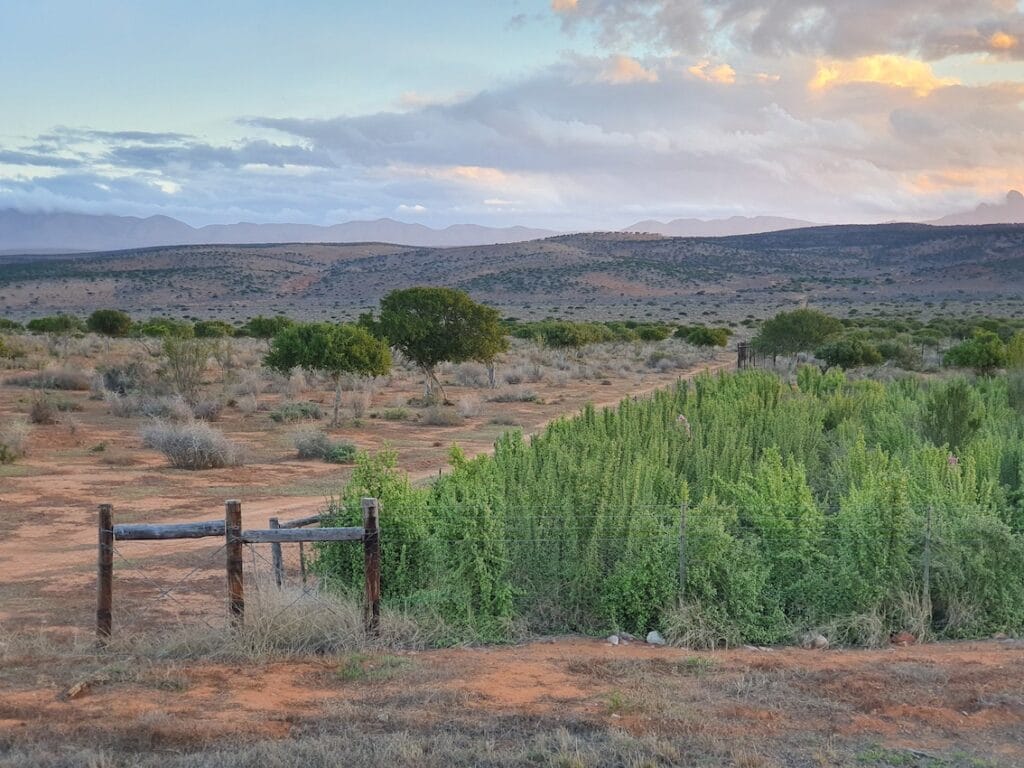
Imperative has reached final investment decision on Phase 2 of its Spekboom Ecosystem Restoration Project in South Africa and secured $91 million in blended financing to scale one of the continent’s largest nature based carbon initiatives.
The expansion will cover 50,000 hectares. It builds on a 10,000-hectare Phase 1 launched in 2024. Work has already begun, which accelerates restoration of degraded landscapes while generating long-term carbon removal credits.
Crucially, a long-term Environmental Risk Purchase Agreement with Amazon underpins the project. As a result, the agreement provides predictable revenue streams. In turn, this certainty enables institutional investors to commit capital at scale.
Blended Finance Model Combines Public And Private Capital
The $91 million financing structure combines public and private capital in a model designed to reduce risk and improve scalability.
First, a $25 million allocation comes from a World Bank outcome bond issued by the International Bank for Reconstruction and Development and structured by BNP Paribas. Meanwhile, a $66 million syndicated streaming facility comes from GenZero, Mirova, Rubicon Carbon and Bregal Sphere.
Importantly, the outcome bond introduces a performance-linked mechanism. A portion of investor returns depends on the delivery of verified carbon removal credits supplied to Amazon. Therefore, financial outcomes align directly with environmental performance.
Previously, Mirova, GenZero and Rubicon Carbon funded Phase 1. Now, all three investors have increased their commitments. In addition, Bregal Sphere has joined the consortium, strengthening the capital base.
As a result, total committed capital across both phases has reached $114 million, supporting 60,000 hectares of restoration.
Scaling Carbon Removal Through Market Certainty
The Spekboom project targets at least 100,000 hectares at full scale. Over a 40-year crediting period, it is expected to generate more than 35 million tonnes of CO2 equivalent.
Notably, the project holds a BeZero Carbon AApre rating, which reflects low execution risk. At the same time, it has been recognised as a UNEP World Restoration Flagship.
For investors, the structure addresses two persistent barriers in nature-based carbon markets. First, it reduces demand uncertainty. Second, it lowers execution risk. Because Amazon provides anchor demand, the project can secure long-term financing. Consequently, investors gain confidence in both revenue stability and project delivery.
RELATED ARTICLE: South Africa Develops $122 Million Bond to Restore Water Catchments
Kimberly Tan, Head of Investments, GenZero, commented: “A critical challenge in nature-based carbon removal is to drive scale and replicability. Infrastructure-grade execution and an unwavering commitment to project integrity is a prerequisite to attract meaningful fund flows. Imperative’s spekboom project delivers on this by leveraging knowhow from more mature markets and deep carbon expertise. Anchor offtake from Amazon also provided the demand certainty required to unlock both commercial financing from investors and outcome financing from the World Bank. This innovative structure has allowed Imperative to secure the quantum of capital required to drive large-scale, high quality ecosystem restoration in South Africa.”

A Blueprint For Nature As An Asset Class
The financing model reflects a shift in how ecosystem restoration projects are structured and funded. By combining outcome-based public finance with private streaming capital, Imperative has created a framework that can scale across markets.
Scobie Mackay, CEO of Imperative, commented: “We are grateful for the support and collaboration of all the parties involved. Amazon’s anchor demand has enabled us to bring together four institutional streaming capital partners and a World Bank outcome bond in a single financing structure. This combination creates a financing blueprint that we believe can be replicated across geographies and project types. We see this deal as contributing to global efforts to make nature an investable asset class.”

What This Means For Climate Finance Leaders
For C-suite executives and investors, the deal shows a maturing market for nature-based carbon removal. Increasingly, capital is flowing toward projects that combine verified environmental outcomes with structured financial returns.
At the same time, governments and multilateral institutions are taking a more active role. For example, outcome bonds and blended finance mechanisms now help crowd in private capital while maintaining accountability.
Looking ahead, scalable and investable restoration models will be essential. As climate targets tighten, the ability to deploy capital into high-integrity projects will define market leaders. Imperative’s approach therefore offers a practical template to accelerate investment into nature-based solutions across emerging markets.

The ESG News Editorial Team is comprised of veteran financial journalists and sustainability analysts dedicated to providing real-time, objective reporting on global ESG regulations, climate finance, and corporate governance. Our desk monitors daily developments from the SEC, IFRS, CSRD and international regulatory bodies to ensure our 1M+ readers receive accurate, data-driven insights into the evolving sustainable investment landscape. Follow the ESG News Editorial Team for expert reporting on global sustainability standards, ESG disclosures, and climate policy. Access over 10,000 investigative reports and real-time updates.