
US Imposes Solar Tariffs Up To 123% On Imports From India, Indonesia And Laos
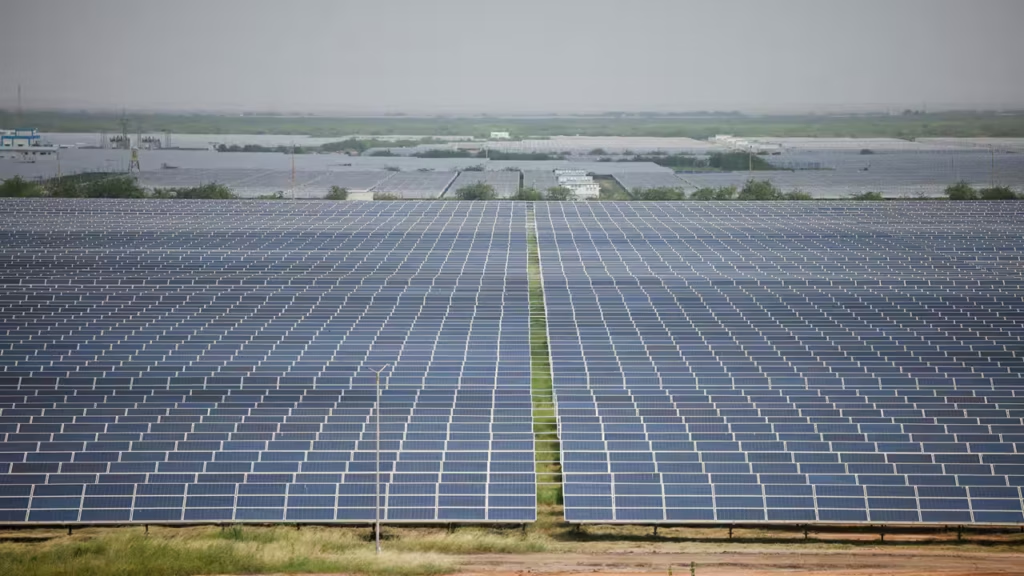
- Tariffs of up to 123.04% target $4.5 billion in solar imports, reshaping US supply chains
- Move strengthens domestic manufacturing policy but risks raising project costs
- Signals continued trade intervention in clean energy markets amid global competition
The US has escalated its trade intervention in clean energy markets, imposing preliminary antidumping duties on solar cells and panels imported from India, Indonesia, and Laos. The decision reflects mounting pressure from domestic manufacturers seeking protection against low-cost imports as the country accelerates its energy transition.
The US Commerce Department found that producers in the three countries sold solar products in the US at unfairly low prices. Officials aligned with domestic industry claims that imported goods were distorting competition at a critical stage for local manufacturing growth.
Preliminary dumping margins were set at 123.04% for India, 35.17% for Indonesia, and 22.46% for Laos. These tariffs target a significant share of US solar supply. Imports from the three countries totaled $4.5 billion last year, accounting for roughly two-thirds of total solar imports.
Trade Policy Meets Climate Strategy
The decision highlights a growing tension at the heart of US climate policy. On one side is the need to rapidly scale renewable energy deployment. On the other is a push to build domestic supply chains and reduce reliance on foreign manufacturing.
For policymakers, tariffs are becoming a key lever to support industrial strategy. The US has spent more than a decade imposing duties on solar imports across Asia, including earlier actions targeting Malaysia, Cambodia, Vietnam, and Thailand.
The latest move reinforces a broader shift toward economic nationalism in clean energy. It aligns with efforts to localize production under industrial policy frameworks that prioritize resilience and job creation alongside emissions reduction.
Industry Pushback And Market Implications
The case was brought by the Alliance for American Solar Manufacturing and Trade, a coalition of US-based producers. Its members include First Solar, Qcells, Talon PV, and Mission Solar.
“The preliminary determinations confirm that producers in these countries are dumping solar cells and modules into the US market at unfairly low prices, undercutting American-made products and distorting market competition at a pivotal moment for the domestic manufacturing sector,” the Alliance said in a statement.
For US manufacturers, the tariffs offer near-term protection and pricing support. For developers and buyers, the implications are more complex. Higher import costs could translate into increased prices for solar projects, potentially slowing deployment timelines.
This creates a delicate balance for investors and executives. While domestic capacity may strengthen over time, near-term supply constraints and pricing volatility remain key risks.
RELATED ARTICLE: Meta To Buy Green Credits from Four Major US Solar Energy Projects
What Comes Next
The Commerce Department will issue final determinations in the coming months. A decision on imports from India and Indonesia is expected around July 13, while Laos will follow around September 9.
Earlier this year, the agency also introduced preliminary countervailing duties on the same countries, targeting subsidies alongside pricing practices. Together, these measures could significantly reshape sourcing strategies for solar developers operating in the US market.
Executives will need to monitor both policy timelines and supplier exposure. Procurement strategies may shift toward domestic producers or alternative international markets not yet subject to tariffs.
Global Ripple Effects
The move carries broader implications for global clean energy trade. As major economies compete to secure supply chains, trade barriers are becoming more common across renewable technologies.
For emerging market producers, access to large markets like the US is increasingly uncertain. For global investors, policy risk is now a central factor in evaluating renewable energy opportunities.
At a system level, the decision illustrates how climate ambition is increasingly intertwined with industrial policy. The path to net zero is no longer just about deploying clean energy at scale. It is also about where that energy is manufactured, who controls supply chains, and how governments balance speed with sovereignty.

The ESG News Editorial Team is comprised of veteran financial journalists and sustainability analysts dedicated to providing real-time, objective reporting on global ESG regulations, climate finance, and corporate governance. Our desk monitors daily developments from the SEC, IFRS, CSRD and international regulatory bodies to ensure our 1M+ readers receive accurate, data-driven insights into the evolving sustainable investment landscape. Follow the ESG News Editorial Team for expert reporting on global sustainability standards, ESG disclosures, and climate policy. Access over 10,000 investigative reports and real-time updates.