Liverpool FC Sets Global Benchmark With Food Sustainability Certification Across Operations
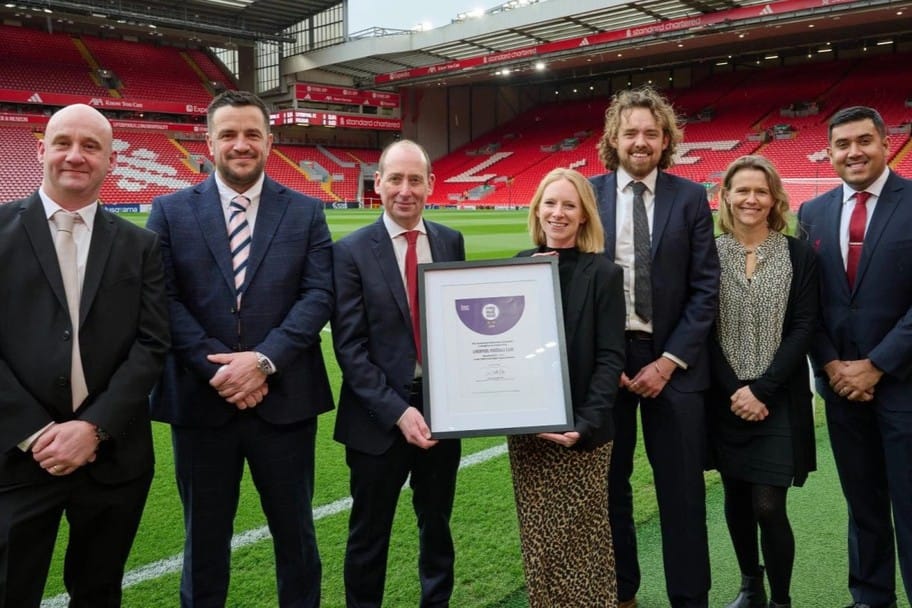
- First football club globally to achieve the Food Made Good Standard across all food and beverage operations
- Weekly redistribution of 1,200 meals and target to recycle 100% of food waste by 2030
- Certification spans sourcing, environmental impact, and social responsibility across five major sites
Sport Meets Systemic Food Reform
Liverpool FC
Liverpool FC has become the first football club globally to secure the Food Made Good Standard across its entire food and beverage operation, marking a significant shift in how large-scale sports organisations approach sustainability.
The certification, awarded by Sustainable Restaurant Association, granted the club a two-star rating in its first evaluation. It assessed performance across sourcing, society and environmental impact at five key sites, including Anfield, the AXA Training Centre and the club’s Academy.
The move positions Liverpool FC at the forefront of sustainable food systems within global sport, a sector increasingly under scrutiny for its environmental footprint and supply chain practices.
Embedding Sustainability Into Operations
The achievement forms part of the club’s broader sustainability strategy, The Red Way, which focuses on long-term environmental and social impact across its operations.
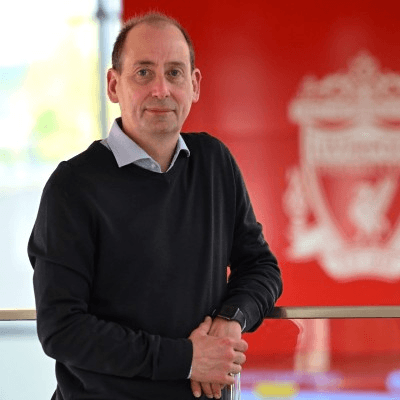
Paul Cuttill, chief operating officer at Liverpool FC, said: “Creating a food system that is environmentally restorative and socially just is central to our approach at LFC. “Certification to the Food Made Good Standard, a comprehensive global sustainability mark, reflects the progress we are making across our operations to deliver for our people, our planet and our communities.”
The club has aligned its food strategy with measurable targets. It aims to recycle 100 per cent of food waste by 2030, a goal that reflects growing pressure on large venues to reduce landfill dependency and improve circularity.
Already, surplus matchday food is redistributed across Merseyside, providing around 1,200 meals each week to local communities. This initiative links operational efficiency with social impact, addressing both food waste and food insecurity.
Scaling Sustainable Food Systems
Liverpool FC has implemented a wide range of initiatives designed to shift both internal operations and fan behaviour.
Across its sites, the club has introduced on-site allotments and gardens. These spaces promote seasonal produce while strengthening engagement between players, staff and partners around sustainable food practices.
Operational changes at Anfield include the removal of single-use plastics such as straws and cutlery. Reusable cup and food tray schemes are now in place, supported by fan-facing recycling programmes. More than one million plastic bottles have been collected in recent seasons, indicating strong participation at scale.
The club is also working with local organisations and social enterprises. Through its community arm, 18 young people have already been supported into roles within hospitality operations, linking sustainability efforts with employment pathways.
RELATED ARTICLE: Liverpool FC Unveils World’s First Carbon-Neutral Jersey with 1PointFive
A Governance And Industry Signal
For executives and investors, the certification highlights a broader governance shift. Sustainability is moving beyond facilities management into core operational strategy, particularly in high-visibility sectors like sport and entertainment.
Juliane Caillouette Noble, CEO of the Sustainable Restaurant Association, said: “We are so thrilled to see Liverpool FC complete the Food Made Good Standard, earning an impressive two stars in their first evaluation. “From sourcing ingredients responsibly and reducing single-use plastic waste, to supporting communities through LFC Foundation, the club’s Red Way initiatives are both comprehensive and impactful.“As the first club-wide football club to achieve the Food Made Good Standard, Liverpool FC is leading the way for live sports and events, proving that food service operations of any shape or size can work towards tangible goals and create real change, both inside their operations and in their wider communities.

The certification offers a replicable framework for other clubs and large venues. It demonstrates that food systems can be audited, benchmarked and improved in line with global ESG expectations.
What This Means For Global ESG Strategy
Liverpool FC’s approach reflects a growing convergence between sustainability, brand value and operational resilience. Food systems are now recognised as a critical lever for emissions reduction, waste management and community engagement.
For global sports organisations, the implications are clear. Stakeholders expect measurable progress, not isolated initiatives. Certifications like the Food Made Good Standard provide third-party validation that can influence sponsorships, partnerships and investor confidence.
As regulatory pressure and consumer expectations rise, the integration of sustainable food systems is likely to become standard practice across major venues worldwide.
Liverpool FC’s model shows how scale, visibility and governance can align. It sets a precedent not just for football, but for any organisation managing complex, high-volume food operations in a climate-conscious economy.

The ESG News Editorial Team is comprised of veteran financial journalists and sustainability analysts dedicated to providing real-time, objective reporting on global ESG regulations, climate finance, and corporate governance. Our desk monitors daily developments from the SEC, IFRS, CSRD and international regulatory bodies to ensure our 1M+ readers receive accurate, data-driven insights into the evolving sustainable investment landscape. Follow the ESG News Editorial Team for expert reporting on global sustainability standards, ESG disclosures, and climate policy. Access over 10,000 investigative reports and real-time updates.