Ford Energy, EDF Sign Battery Storage Deal For Up To 20 GWh Across North America
- EDF power solutions can procure up to 4 GWh of Ford Energy battery storage systems each year under a five-year framework agreement.
- The deal could support up to 20 GWh of grid-scale storage capacity for renewable integration and grid resilience across North America.
- Deliveries are expected to begin in 2028, giving EDF supply visibility as demand rises for domestic utility-grade energy storage.
Ford Energy and EDF power solutions North America have signed a five-year framework agreement that could reshape the supply chain for grid-scale battery storage in the United States.
Under the agreement, EDF power solutions will have the ability to procure up to 4 gigawatt hours of DC Block battery energy storage systems each year from Ford Energy. Over the full term, the agreement represents a potential volume of up to 20 GWh.
Ford Energy is a wholly owned subsidiary of Ford Motor Company. EDF power solutions North America is part of the EDF Group, one of the world’s major energy companies. The deal gives EDF access to large-scale battery systems for its expanding renewable and storage portfolio across North America.
Deliveries are expected to begin in 2028.
For energy developers, the agreement speaks to a growing pressure point in the power sector. Renewable deployment is rising, but grid operators need storage capacity that can manage intermittency, support reliability, and help shift clean power into peak demand periods.
Domestic Supply Becomes A Strategic Priority
The agreement places Ford Energy into the utility-scale battery market at a time when developers are looking for more predictable supply chains. Battery storage has become central to renewable integration, but procurement risk remains a major concern.
Long lead times, component traceability, and lifecycle support now carry board-level importance for large infrastructure buyers. For EDF, the framework provides access to domestic manufacturing capacity and a clearer view of future supply.
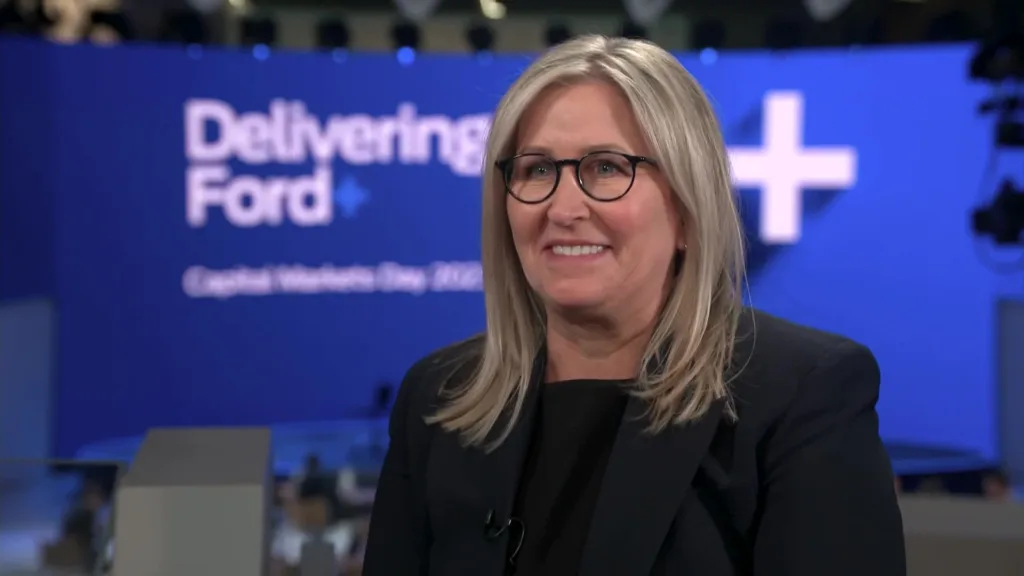
“This agreement with EDF power solutions validates the market’s need for a BESS supplier that combines industrial-scale manufacturing discipline with full lifecycle accountability,” said Lisa Drake, president, Ford Energy. “We are not simply delivering hardware. We are delivering the kind of predictable quality and long-term operational confidence that grid operators and large-scale developers require. Ford Energy was purpose-built to serve customers who cannot afford uncertainty in their energy storage supply chain.”
For Ford Energy, the agreement extends the company’s manufacturing experience into a sector where quality control, scale, and reliability matter as much as cost. Utility-scale storage projects require long operating lives, bankable performance, and systems that can meet demanding grid conditions.
RELATED ARTICLE: Ford Launches Ford Energy To Build 20 GWh Of U.S. Battery Storage Annually
EDF Targets Storage Growth Across North America
EDF power solutions is building its energy storage portfolio as battery systems become more important to renewable development. Storage helps wind and solar assets deliver power when grids need it most. It also supports services such as frequency regulation, voltage support, demand response, and backup power.
“As we continue to expand our energy storage portfolio, supply chain reliability and product quality are paramount,” said Tristan Grimbert, CEO, EDF power solutions North America. “Ford Energy’s commitment to domestic manufacturing and its rigorous approach to traceability and lifecycle support align with the standards we hold across our portfolio. This framework agreement gives us the supply visibility and product confidence we need to execute at the pace the energy transition demands.”

The comments point to a broader shift in the clean energy market. Developers are no longer focused only on adding megawatts. They also need resilient procurement, dependable equipment, and storage assets that can satisfy investors, utilities, and regulators.
The DC Block System
Ford Energy’s DC Block is a standardized, 20-foot containerized battery energy storage system. Each unit has a rated capacity of 5.45 MWh.
The system uses 512 Ah lithium iron phosphate prismatic cells and is available in two-hour and four-hour discharge configurations. It operates across a voltage range of 1,040 to 1,500 VDC and includes integrated liquid-cooled thermal management.
Ford Energy designed the DC Block for utility-scale applications. These include energy arbitrage, peak load shifting, frequency regulation, voltage support, demand response, backup power, and microgrid integration.
The system’s standardized format may help developers simplify deployment across large portfolios. For investors, that matters. Standardized equipment can reduce project complexity, improve maintenance planning, and support more consistent operational performance.
What Executives Should Take Away
For C-suite leaders and investors, the agreement reflects the next phase of the energy transition. Battery storage is moving from a supporting technology to critical grid infrastructure.
The deal also shows how industrial manufacturers are entering clean energy supply chains with scale as a competitive advantage. As power demand rises from electrification, data centers, and reshoring, storage will be central to grid resilience.
For North America, the framework adds another signal of how domestic manufacturing, renewable integration, and energy security are becoming linked. The companies are positioning storage not as an optional add-on, but as core infrastructure for a cleaner and more reliable power system.

The ESG News Editorial Team is comprised of veteran financial journalists and sustainability analysts dedicated to providing real-time, objective reporting on global ESG regulations, climate finance, and corporate governance. Our desk monitors daily developments from the SEC, IFRS, CSRD and international regulatory bodies to ensure our 1M+ readers receive accurate, data-driven insights into the evolving sustainable investment landscape. Follow the ESG News Editorial Team for expert reporting on global sustainability standards, ESG disclosures, and climate policy. Access over 10,000 investigative reports and real-time updates.