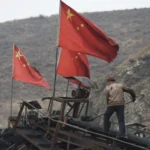
China’s Top Coal Region Expands Coal-to-Oil Push as Energy Security Pressures Rise

- Inner Mongolia plans to build China’s largest coal-to-oil, gas and chemicals base to reduce reliance on imported fuels.
- The region produces about 1.25 billion to 1.28 billion tons of coal each year, more than a quarter of China’s total output.
- Coal-to-petrochemicals growth may support energy security, but it adds pressure to China’s climate goals due to high carbon emissions.
Inner Mongolia Moves to Reinforce Domestic Fuel Supply
China’s largest coal-producing region is preparing a major expansion of coal-to-oil, coal-to-gas and coal-to-chemicals capacity. The plan reflects Beijing’s renewed focus on energy security as geopolitical risk tests global fuel markets.
Inner Mongolia wants to build China’s largest base for converting coal into oil, gas and chemical products. The goal is to reduce exposure to imported oil and gas. That priority has gained urgency as conflict linked to Iran keeps attention on supply risks across energy markets.
The region sits at the centre of China’s complex transition. It is the country’s top coal producer and its leading renewable energy producer. That makes Inner Mongolia a clear example of China’s dual-track energy strategy. Beijing is expanding clean power at speed, while still relying on coal to manage security, industrial demand and price stability.
“We are scaling up and strengthening the domestic production capacity of coal-to-oil, coal-to-gas and coal-to-chemical projects in order to increase the domestic self-sufficiency of oil and gas,” Huang Zhiqiang, the number two official in the region, said at a press conference on Thursday without providing further details.

Coal Conversion Gains Strategic Weight
China’s coal-to-petrochemicals industry remains small compared with the country’s import needs. In 2024, China’s production of gas, liquids and chemicals from coal replaced only about 6% of the crude oil and gas it imported that year.
Even so, the sector is growing. In May, China’s environment ministry approved a 22.1 billion yuan, or $3.3 billion, coal-to-olefin demonstration project in Ordos, Inner Mongolia. The project will have annual capacity of 800,000 metric tons. Olefin is a key input for plastics and chemicals.
The economics have shifted in favour of coal-based producers. Since the Iran war, profits in the coal-to-petrochemicals sector have risen. Companies using cheap domestic coal now hold a feedstock cost advantage over rivals that depend on higher-priced oil.
That advantage has policy value. For Beijing, coal conversion offers a way to use domestic reserves for fuel and chemical security. It also supports industrial supply chains that need stable access to basic materials.
RELATED ARTICLE: China Drives $80 Billion in Overseas Clean Technology Expansion
Carbon Costs Test China’s Climate Strategy
The climate trade-off is significant. Converting coal into oil, gas and chemicals produces high levels of carbon emissions. That creates a direct challenge for China’s climate targets and for investors tracking transition risk in hard-to-abate sectors.
Huang did not directly answer questions on how policymakers would manage the carbon cost of coal conversion. He said Inner Mongolia is balancing its coal resources with renewable energy development. Renewable energy now accounts for 53% of the region’s installed power capacity.
That balance will shape how global investors assess China’s transition pathway. The same region that is expanding coal-to-petrochemicals is also building large volumes of renewable power. This creates both opportunity and risk for companies exposed to China’s energy, chemicals and industrial markets.
Government documents show plans to promote green hydrogen in coal-to-chemicals projects. Clean energy advocates have warned that hydrogen should not become a justification for expanding high-emissions coal-based production.
Ordos Becomes the Industrial Focal Point
Inner Mongolia produces about 1.25 billion to 1.28 billion tons of coal each year, Huang said. That is more than a quarter of China’s total coal production.
Ordos produces about two-thirds of Inner Mongolia’s coal. It is also where the regional government is building the coal-to-petrochemicals base. The city already plays a central role in China’s coal economy and is now becoming more important to the country’s energy security strategy.
For C-suite leaders and investors, the issue is not only fuel supply. It is also transition credibility. Coal conversion may help China reduce import dependence, but it could increase emissions unless paired with credible carbon management.
The expansion highlights a broader global tension. Governments are trying to secure energy supplies while advancing climate commitments. Inner Mongolia’s strategy shows how difficult that balance can be for economies with large industrial bases and high exposure to imported fuels.
China’s decision will matter beyond its borders. It could affect chemical markets, coal demand, carbon emissions and investor expectations for Asia’s largest economy. It also shows that energy security remains a powerful force in climate policy, even as renewables gain ground.

The ESG News Editorial Team is comprised of veteran financial journalists and sustainability analysts dedicated to providing real-time, objective reporting on global ESG regulations, climate finance, and corporate governance. Our desk monitors daily developments from the SEC, IFRS, CSRD and international regulatory bodies to ensure our 1M+ readers receive accurate, data-driven insights into the evolving sustainable investment landscape. Follow the ESG News Editorial Team for expert reporting on global sustainability standards, ESG disclosures, and climate policy. Access over 10,000 investigative reports and real-time updates.