New York Approves $1 Billion Energy Rebate Plan As Utility Costs Pressure Households
- New York’s FY27 budget includes $1 billion in one-time energy rebate checks for eligible residents, with payments mailed between September and December.
- The budget creates stricter utility oversight, including limits on costs passed to ratepayers and new scrutiny of rate hike requests.
- The package adds $1 billion to the Sustainable Future Program, alongside major funding for clean water, grid flexibility, solar deployment and climate resilience.
New York has moved to blunt rising household energy costs while keeping its climate agenda intact, approving a sweeping affordability and sustainability package in the state’s FY27 enacted budget.
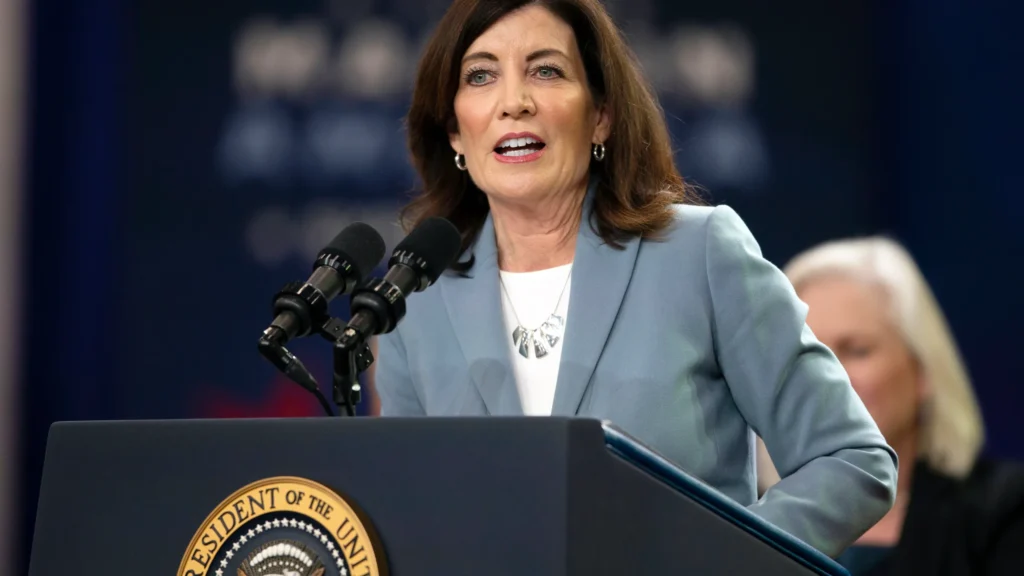
Governor Kathy Hochul signed the legislation as New Yorkers face higher utility bills and gas prices. The package combines direct rebates, tougher utility accountability and new clean energy investments. It also channels major funding into water infrastructure, coastal resilience and severe weather preparedness.
“Dangerous policies coming out of Washington have sent the costs of power skyrocketing and New Yorkers need relief,” Governor Hochul said. “This Budget not only means enhanced protections and direct financial relief for ratepayers today, it prepares us for an even stronger tomorrow thanks to our historic investments in sustainability, grid reliability, infrastructure and resiliency. In this budget, we are proving that we can prioritize affordability without compromising our New York values.”

$1 Billion In Direct Energy Relief
At the centre of the affordability package is the Protecting Our Wallets Energy Rebate, known as POWER. The programme will send $1 billion in one-time rebate checks to eligible New York residents.
Joint filers with income below $150,000 will receive $200. Joint filers earning between $150,000 and $300,000 will receive $150. Single filers with income below $150,000 will receive $100.
The rebates will be issued as advanced credit checks and mailed between September and December. Eligibility is tied to 2024 tax filings, full-time New York residency, income thresholds and dependent status.
Assembly Speaker Carl Heastie said, “The Assembly Majority was proud to take the lead in proposing much needed energy rebate checks because we know the burden that rising costs and high utility rates have put on so many families across the state. We have worked to put together a budget that will put money back into the pockets of hardworking New Yorkers, protect ratepayers and invest in our communities. We will continue to work with Governor Hochul and our colleagues in the Senate to put New York families first and to safeguard our environment and communities for future generations.”

Utility Oversight Moves To The Boardroom
The budget also institutes a broad ratepayer protection plan aimed at changing how utilities recover costs and justify rate hikes.
Utilities will be barred from passing lobbying costs, public relations campaigns, political donations and luxury travel expenses on to ratepayers. Utility chief executive compensation will also be benchmarked against energy affordability goals set by the Public Service Commission. If a utility earns excess profit, the money must be returned to ratepayers.
Rate hike requests will face tighter review. Utilities will need to prove that capital projects are necessary and that zero-emission options were fully considered. They must also present a budget-constrained option that keeps operating costs below inflation.
The state and other parties will now have 14 months to review rate requests. Regulators will also be able to set multi-year rate cases where they benefit consumers.
A new energy affordability index will track how utility rates affect households. If a rate case pushes average household energy burden above 6 percent, the state will be able to place an independent Affordability Monitor inside the utility’s boardroom.
Senate Majority Leader Andrea Stewart-Cousins said, “Our Senate Majority has advanced utility affordability legislation throughout the year, recognizing the growing burden energy costs are placing on New Yorkers, and this budget continues those efforts by delivering additional relief while also investing in a greener state. New Yorkers are feeling the strain of rising utility costs every single day, and families deserve relief, transparency, and accountability from utility companies. That’s why this budget delivers direct assistance to ratepayers, strengthens consumer protections, and makes real investments in clean energy, clean water, and resilient infrastructure. These measures will help lower long-term costs while strengthening New York’s environmental goals and commitment to a more sustainable future. I’m proud of what our conference was able to accomplish alongside Governor Hochul and Speaker Carl Heastie to move New York’s green future forward and ease the burden on our constituents.”

RELATED ARTICLE: New York Commits $25 Million to Farm Projects Protecting Water Quality
Clean Energy Funding Expands
The FY27 budget adds another $1 billion to the Sustainable Future Program. The funding includes $500 million for building emissions reductions, $300 million for renewable energy projects, up to $75 million for zero-emission transportation and $50 million for methane mitigation.
The EmPower+ programme will receive a $200 million boost, including $150 million from the Sustainable Future Program and $50 million from the NYSERDA capital budget. The programme supports home energy efficiency, affordability and local clean energy jobs.
New York is also advancing the Excelsior Power programme, backed by a $33 million allocation this year. It will use demand response and smart technologies to shift electricity use across the grid. Consumers who enrol will receive $25 per month during the first year.
The state says these measures can avoid hundreds of millions of dollars in annual system costs by reducing the need for expensive grid upgrades and backup power plants.
Infrastructure, Resilience And Solar Deployment
The budget includes $750 million for clean water infrastructure. It is the first tranche of a five-year, $3.75 billion investment to protect New York’s waters and support sustainable housing development.
Another $667 million will support coastal resilience projects for local communities. A new $10 million grant programme will help disadvantaged communities prepare for severe weather.
The budget also includes reforms to support solar deployment in public schools. Updated State Building Aid rules will give districts more flexibility to install renewable energy systems, including ground-mounted solar where appropriate.
For investors and corporate energy users, the package points to a state strategy built around affordability, grid reliability and climate resilience. For utilities, it raises the governance bar. For households, it offers short-term relief while New York tries to contain the long-term cost of its energy transition.
State Senator Kevin Parker said, “These historic investments reflect years of work by the Senate Energy and Telecommunications Committee to build a more affordable, reliable, and sustainable energy future for New Yorkers. From direct energy relief and stronger ratepayer protections to investments in grid modernization, clean water infrastructure, resiliency and clean energy expansion, this approach delivers real benefits to communities today while preparing New York for the future. As Chair of the Senate Energy and Telecommunications Committee, I have continued to champion an all-of-the-above strategy focused on lowering costs, strengthening our infrastructure, creating jobs and ensuring every community can benefit from New York’s energy transition. These investments are about protecting families now while building a cleaner, stronger and more resilient state for generations to come.”

New York’s budget places a clear political bet: climate policy will only remain durable if affordability is addressed alongside emissions cuts. That balance is becoming a defining test for governments worldwide as energy systems modernise under cost pressure.

The ESG News Editorial Team is comprised of veteran financial journalists and sustainability analysts dedicated to providing real-time, objective reporting on global ESG regulations, climate finance, and corporate governance. Our desk monitors daily developments from the SEC, IFRS, CSRD and international regulatory bodies to ensure our 1M+ readers receive accurate, data-driven insights into the evolving sustainable investment landscape. Follow the ESG News Editorial Team for expert reporting on global sustainability standards, ESG disclosures, and climate policy. Access over 10,000 investigative reports and real-time updates.