Climate Investor Three Backs $4 Million Wastewater-To-Green-Methanol Project In South Africa
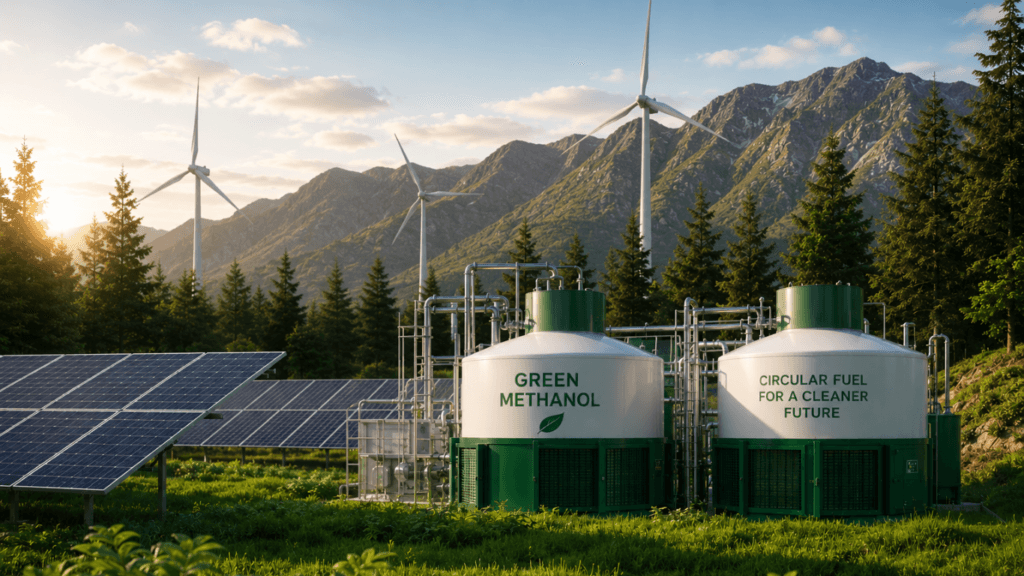
- Climate Investor Three, through SA-H2 Fund, will provide up to $4 million to develop South Africa’s first wastewater-to-green-methanol facility in Gauteng.
- The project is expected to process 90,000 tonnes of municipal sewage sludge a year and produce 14,300 tonnes of green methanol annually.
- Once operational, the facility is expected to avoid about 118,950 tonnes of CO₂ equivalent emissions each year, while creating up to 300 construction jobs and 60 permanent roles.
Municipal sewage sludge from the Sebokeng Wastewater Treatment Works is set to become the feedstock for South Africa’s first wastewater-to-green-methanol plant, after Climate Investor Three committed development funding to the project through its affiliate, SA-H2 Fund.
The blended finance facility, managed by Climate Fund Managers in partnership with Invest International, has signed a Development Funding Agreement with Green eFuels Producers. The deal will support early-stage development of a green methanol production facility in the Vaal Special Economic Zone.
The fund has committed up to $4 million, or about ZAR 65.8 million. The capital will support technical design, engineering work, permitting, impact assessments and commercial structuring. The agreement also gives Climate Investor Three and SA-H2 Fund the right to invest up to $26 million, or about ZAR 430 million, in equity funding.
Financial close is targeted for the second half of 2027. Commercial operations are expected to begin in 2029.
Sewage Sludge Becomes A Low-Carbon Industrial Fuel
The planned facility will process about 90,000 tonnes of municipal sewage sludge each year. Renewable power will drive the production process. The project will use 50 MW of co-located solar power. It will also source wind power through South Africa’s wheeling framework.
That clean electricity will power a 10 MW electrolyser to produce green hydrogen. The hydrogen will then be used to make about 14,300 tonnes of green methanol annually.
For South African utilities, sewage sludge is an increasing waste management challenge. The project aims to turn that liability into a low-carbon fuel source for hard-to-abate sectors.
Methanol is widely used in industrial production, including plastics and other materials. Conventional methanol is usually produced from fossil fuels. Green methanol uses renewable energy and sustainable carbon sources, such as biogenic waste and captured carbon dioxide.
That makes it relevant for sectors under pressure to cut emissions, including shipping, aviation and power generation. These industries face limited near-term decarbonisation options and rising scrutiny from regulators, financiers and customers.
Developers estimate the project could avoid about 118,950 tonnes of CO₂ equivalent emissions a year. That figure comes from projected green methanol output and preliminary lifecycle assessment modelling.
Blended Finance Targets South Africa’s Hydrogen Economy
Climate Investor Three and SA-H2 Fund form part of a $750 million target blended finance facility focused on the energy transition and green hydrogen value chain in Southern Africa.
Public and private sector investors support the fund. They include the European Commission under the EU-South Africa Global Gateway Investment Package, Invest International and South Africa’s Public Investment Corporation. Other supporters include the Industrial Development Corporation of South Africa, the Development Bank of Southern Africa and Sanlam.
RELATED ARTICLE: Climate-Focused Investor Junction Growth Raises €115M to Scale Energy Transition SMEs
Mphokolo Makara, CEO of SA-H2 Fund Managers, said: “This project demonstrates the effects of energy transition for industrial operations in the real economy – turning everyday waste into a valuable low-carbon fuel. By transforming sewage into a productive resource, it addresses a key waste management challenge while supporting local jobs and strengthening South Africa’s industrial base through a just transition. It demonstrates how circular economy solutions can play a practical role in decarbonising hard-to-abate sectors.”

Chris Heinermann, Co-Founder of Green eFuels Producers, said: “This investment is a major milestone for our project and a strong endorsement of our vision to produce green methanol using innovative, circular solutions. This project will contribute to decarbonising hard-to-abate industries while addressing local wastewater challenges, creating jobs, strengthening local value chains and generating long-term value for the Vaal region.”
Water Security And Local Jobs Add Regional Weight
Beyond fuel production, the facility could return about 50,000 to 60,000 cubic metres of industrial-grade water each year to the local water utility. That adds a water resilience layer to the project. It matters in a region where industrial growth, municipal infrastructure and resource security remain closely linked.
The project is also expected to create up to 300 construction jobs and 60 permanent operational roles. A Community Development Programme will focus on skills development and socio-economic upliftment in the Vaal region.
European Commissioner for International Partnerships Jozef Síkela commented: “The EU stands with its long-term partner, South Africa, to support its green transition. Through our EUR 12 billion EU-South Africa Global Gateway Investment Package, announced at the Global Gateway Forum last October, and its unique 360-degree approach, we are working together to unlock opportunities for cleaner growth, skilled jobs, local value chains and innovation, while also strengthening Europe’s energy and economic security. This green methanol project will help deliver lasting benefits for South Africa.”
The project aligns with South Africa’s Hydrogen Society Roadmap, Nationally Determined Contributions and wider decarbonisation objectives. It also lays the groundwork for a potential Green Methanol Corridor, aimed at scaling green fuel infrastructure across the country.
For investors and executives, the takeaway is practical: South Africa’s hydrogen economy is moving from policy ambition into bankable industrial use cases. The Vaal project links waste management, clean power, green hydrogen and export-relevant fuels in one model. If it reaches financial close, it could become a template for circular fuel infrastructure across emerging markets.

The ESG News Editorial Team is comprised of veteran financial journalists and sustainability analysts dedicated to providing real-time, objective reporting on global ESG regulations, climate finance, and corporate governance. Our desk monitors daily developments from the SEC, IFRS, CSRD and international regulatory bodies to ensure our 1M+ readers receive accurate, data-driven insights into the evolving sustainable investment landscape. Follow the ESG News Editorial Team for expert reporting on global sustainability standards, ESG disclosures, and climate policy. Access over 10,000 investigative reports and real-time updates.