SHEIN Expands SAF Strategy With DHL Deal To Cut Air Cargo Emissions
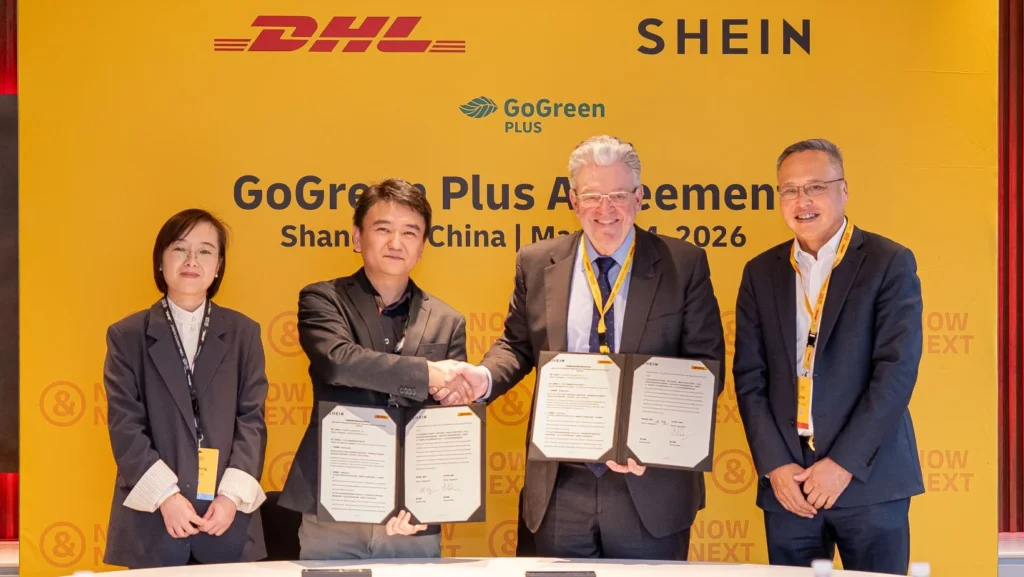
- SHEIN partners with DHL to integrate sustainable aviation fuel into global air cargo, advancing Scope 3 emissions strategies
- Pilot programmes across Atlas Air and Air China Cargo delivered measurable reductions and testing of SAF certification frameworks
- Industry collaboration remains critical as SAF supply constraints and high costs limit near-term scalability
SHEIN is deepening its push into lower-carbon logistics, signing an agreement with DHL to adopt the GoGreen Plus service and expand its use of sustainable aviation fuel across air cargo operations. The move places the fast-growing fashion retailer among a rising cohort of corporates testing SAF as a pathway to reduce transport-related emissions.
The agreement allows SHEIN to support SAF deployment within DHL’s aviation network, with lifecycle emissions reductions allocated through recognised accounting methodologies. These reductions are verified through certification frameworks, enabling inclusion in corporate emissions reporting.
“Working with partners such as DHL allows us to better understand how sustainable aviation fuel solutions may be incorporated into air cargo logistics,” said Mustan Lalani, SHEIN’s Head of Sustainability. “Initiatives like this are part of SHEIN’s broader efforts to explore how emerging approaches across the aviation sector may contribute to addressing carbon emissions associated with air transport.”

DHL Partnership Signals Logistics Shift
DHL’s GoGreen Plus model reflects a broader shift in logistics, where large corporate clients increasingly co-invest in decarbonisation solutions rather than relying solely on carriers. By blending SAF into its fuel supply and allocating the emissions benefit to customers, DHL is creating a market mechanism that links corporate demand with aviation fuel transition.
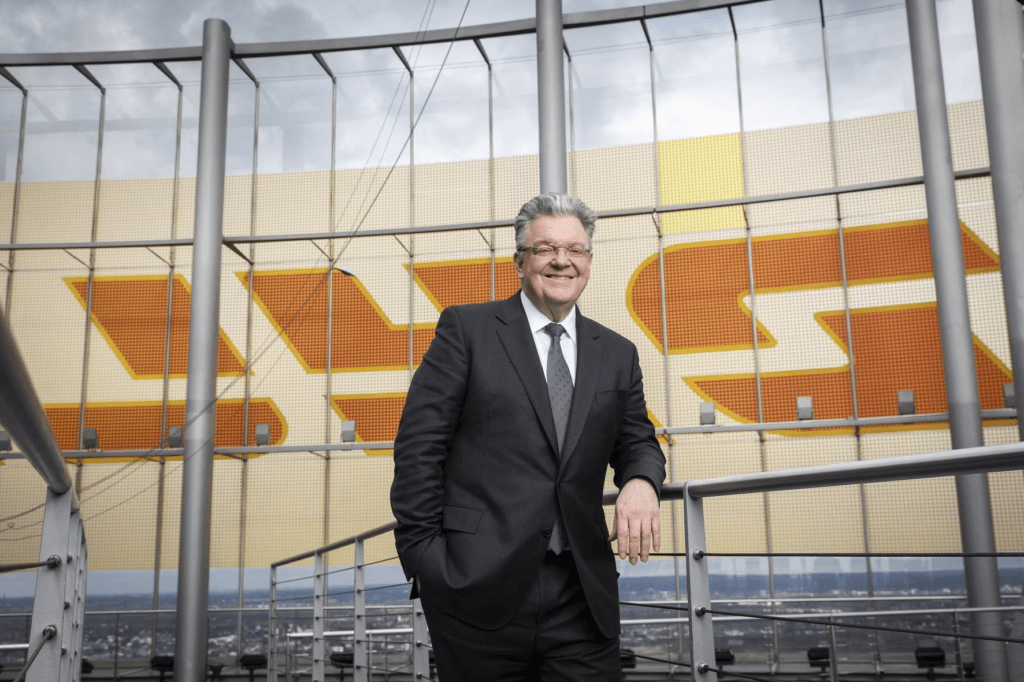
“DHL is a pioneer in sustainable logistics. Signing the GoGreen Plus agreement with SHEIN marks another important milestone in DHL Express’s commitment to driving the green transformation of air logistics,” says John Pearson, CEO of DHL Express. “As a long-term partner in SHEIN’s global logistics network, we are pleased to work together to explore how sustainable aviation fuel can be integrated into their air cargo operations.”
For executives, this reflects a growing expectation that supply chain emissions cannot be addressed without direct participation in emerging fuel markets.
Expanding SAF Pilots Across Global Network
The DHL agreement builds on a series of pilot initiatives SHEIN has launched to test SAF deployment across different geographies and partners.
In 2025, the company procured and used 187.3 tonnes of SAF across 14 Atlas Air charter flights, delivering an estimated emissions reduction of 579.1 tCO₂e. While modest in scale, the pilot provided operational insights into SAF integration and emissions accounting.
SHEIN has also moved into the Chinese market through a multi-stakeholder pilot led by China National Aviation Fuel and the Civil Aviation Authority’s research arm. Under this programme, the company plans to procure SAF from Air China Cargo, supported by traceability systems and certification of emissions reductions.
These pilots are designed not only to reduce emissions but to test the infrastructure underpinning SAF markets, including certification, procurement mechanisms and reporting standards.
RELATED ARTICLE: SHEIN Dives into Sustainable Denim with Water-Saving Tech
Industry Collaboration Driving Demand
Beyond bilateral partnerships, SHEIN has joined the World Economic Forum’s Green Fuel Forward initiative, aimed at accelerating SAF adoption across Asia Pacific. The programme focuses on building corporate demand signals, strengthening collaboration between airlines and fuel producers, and scaling awareness of SAF as a viable decarbonisation pathway.
The retailer’s earlier memorandum with Lufthansa Cargo further indicates a strategy built on ecosystem engagement rather than isolated projects.
For investors and sustainability leaders, this reflects a broader trend: corporates are increasingly acting as demand anchors in early-stage climate solutions where supply remains constrained.
Structural Challenges Limit Scale
Despite growing momentum, SAF remains a marginal component of global aviation fuel supply. Production capacity is limited, and costs remain significantly higher than conventional jet fuel, constraining widespread adoption.
SHEIN acknowledges that the emissions impact of its current initiatives remains small relative to its overall air transport footprint. The pilots are positioned as learning exercises to build operational readiness and partnerships ahead of broader industry scaling.
The company is also using these initiatives to better understand economic feasibility, certification frameworks and how SAF can be integrated into complex logistics networks.
What This Means For Executives
For C-suite leaders, SHEIN’s approach highlights a critical shift in climate strategy. Decarbonising logistics is no longer a passive exercise. It requires active participation in emerging markets, co-investment with suppliers, and a willingness to test imperfect solutions.
The broader implication is clear. As regulatory pressure tightens and Scope 3 disclosures expand, companies will need to engage directly with technologies like SAF, even before they reach commercial maturity.
SHEIN’s expanding SAF portfolio reflects a pragmatic approach. Early adoption, even at small scale, is becoming a prerequisite for long-term competitiveness in a decarbonising global economy.
Follow ESG News on LinkedIn

The ESG News Editorial Team is comprised of veteran financial journalists and sustainability analysts dedicated to providing real-time, objective reporting on global ESG regulations, climate finance, and corporate governance. Our desk monitors daily developments from the SEC, IFRS, CSRD and international regulatory bodies to ensure our 1M+ readers receive accurate, data-driven insights into the evolving sustainable investment landscape. Follow the ESG News Editorial Team for expert reporting on global sustainability standards, ESG disclosures, and climate policy. Access over 10,000 investigative reports and real-time updates.