
Bill Gates Backed TerraPower Starts Construction on First U.S. Utility-Scale Advanced Nuclear Plant
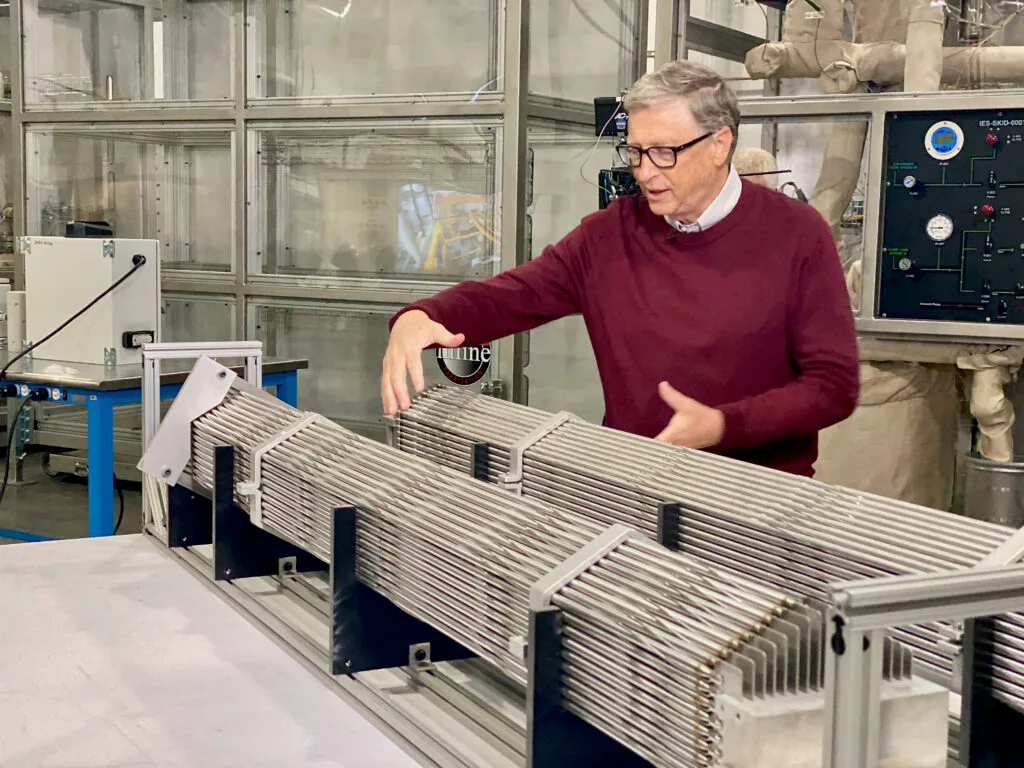
- First utility-scale advanced nuclear plant in the U.S. moves into construction, backed by federal permits and public-private funding
- 345 MW reactor with integrated storage can scale to 500 MW, offering flexible baseload power for ~400,000 homes
- Project anchors U.S. nuclear revival strategy, with potential rollout of multiple plants by 2035
TerraPower has begun construction on its flagship Natrium plant, Kemmerer Unit 1, positioning the project to become the first utility-scale advanced nuclear power facility in the United States.
The milestone follows approval from the U.S. Nuclear Regulatory Commission and caps years of engineering, regulatory work, and site development. It marks a shift from demonstration-stage nuclear innovation toward commercial deployment at scale.
“This is the moment our industry has been working toward for a generation. We’re not just breaking new ground on a first-of-a-kind nuclear plant in Wyoming; we’re building the next generation of America’s energy infrastructure,” said Chris Levesque, president and CEO of TerraPower. “The Natrium plant will deliver reliable and dispatchable power to the grid and Kemmerer Unit 1 serve as a commercial blueprint to mobilize a fleet of Natrium plants across the country and around the world.”

Policy Alignment and Federal Backing
The project reflects growing alignment between U.S. energy policy and private sector investment in advanced nuclear. It is being developed under the Department of Energy’s Advanced Reactor Demonstration Program, which aims to accelerate commercialization of next-generation reactors.
“Today’s construction milestone is a testament to the Department of Energy’s investment in American innovation and helping companies like TerraPower deliver the next generation of advanced nuclear technologies,” said Dr. Rian Bahran, Deputy Assistant Secretary for the U.S. Department of Energy’s Office of Nuclear Energy. “The Natrium reactor shows that when government and private industry work together, we can build a bright future for our country powered by nuclear.”
State and federal officials framed the project as central to U.S. energy security and industrial competitiveness.
“The start of construction on TerraPower’s Natrium plant in Kemmerer marks a major milestone not just for Wyoming, but for the future of American energy,” said Wyoming Governor Mark Gordon. “Wyoming has long powered this country, and today we are leading again, this time in next-generation nuclear technology.”
“The United States needs more reliable baseload power now. Wyoming’s energy workers continue to lead the way,” said U.S. Senator John Barrasso. “Starting construction on this groundbreaking project will create more jobs in Kemmerer and help expand Wyoming’s already strong energy economy.”

Technology Designed for Grid Flexibility
The Natrium system combines a 345-megawatt sodium-cooled fast reactor with molten salt-based energy storage. This hybrid design allows the plant to increase output to 500 megawatts during periods of peak demand.
Unlike conventional reactors, the integrated storage enables flexible dispatch. The plant can maintain steady baseline output while ramping up quickly when needed. This capability positions it as a complement to intermittent renewable energy sources.
“Rocky Mountain Power supports a balanced, all-of-the-above energy strategy,” said Dick Garlish, president of Rocky Mountain Power. “Baseload power is critical to serve our customers, and advanced nuclear technologies like the Natrium project is a promising resource.”

For grid operators and investors, the ability to combine reliability with flexibility addresses one of the key constraints in energy transition planning.
RELATED ARTICLE: TerraPower Secures NRC Permit for First U.S. Commercial Advanced Nuclear Reactor
Economic Impact and Industrial Scaling
Construction is expected to mobilize around 1,600 workers, with approximately 250 permanent roles once the plant is operational. The project also reinforces Wyoming’s position as a major energy hub, particularly given its role as the leading uranium producer in the United States.
“Wyoming has always powered America, and today that proud tradition reaches an exciting new milestone,” said U.S. Senator Cynthia Lummis. “This project delivers what Wyoming communities deserve: good-paying jobs, lasting economic strength, and reliable, affordable baseload power.”

Beyond local impact, the project is intended as a scalable model. TerraPower is advancing commercial agreements, including plans to deploy up to eight Natrium plants by 2035, signaling early market demand for the technology.
Execution and Delivery Strategy
Engineering and construction are being led by Bechtel, which is tasked with delivering the project using standardized processes and digital tools to improve efficiency and reduce execution risk.
“Bechtel is proud to partner with TerraPower as the engineering, procurement and construction contractor on the Natrium advanced reactor,” said Dena Volovar, president of Bechtel’s Nuclear, Security & Environmental business. “By combining TerraPower’s reactor innovation with Bechtel’s processes, experience and execution model we will deliver these nuclear projects consistently, safely and at scale.”

For executives and investors, the emphasis on repeatable delivery models addresses a long-standing barrier in nuclear deployment: cost overruns and timeline uncertainty.
Strategic Implications for Energy Transition
The start of construction at Kemmerer signals a broader shift in how nuclear energy is positioned within global decarbonization strategies. Advanced reactors are increasingly seen as a viable solution for delivering firm, low-carbon power alongside renewables.
As energy demand rises and grid stability becomes more complex, projects like Natrium highlight the role of hybrid technologies that combine generation with storage.
For policymakers, the project offers a test case for accelerating nuclear approvals and public-private financing. For investors, it provides early insight into the commercial viability of next-generation reactors.
If successful, Kemmerer Unit 1 could define the template for a new wave of nuclear infrastructure in the United States and beyond.

The ESG News Editorial Team is comprised of veteran financial journalists and sustainability analysts dedicated to providing real-time, objective reporting on global ESG regulations, climate finance, and corporate governance. Our desk monitors daily developments from the SEC, IFRS, CSRD and international regulatory bodies to ensure our 1M+ readers receive accurate, data-driven insights into the evolving sustainable investment landscape. Follow the ESG News Editorial Team for expert reporting on global sustainability standards, ESG disclosures, and climate policy. Access over 10,000 investigative reports and real-time updates.