
British International Investment and Ecobank DRC Launch $30 Million SME Finance Facility
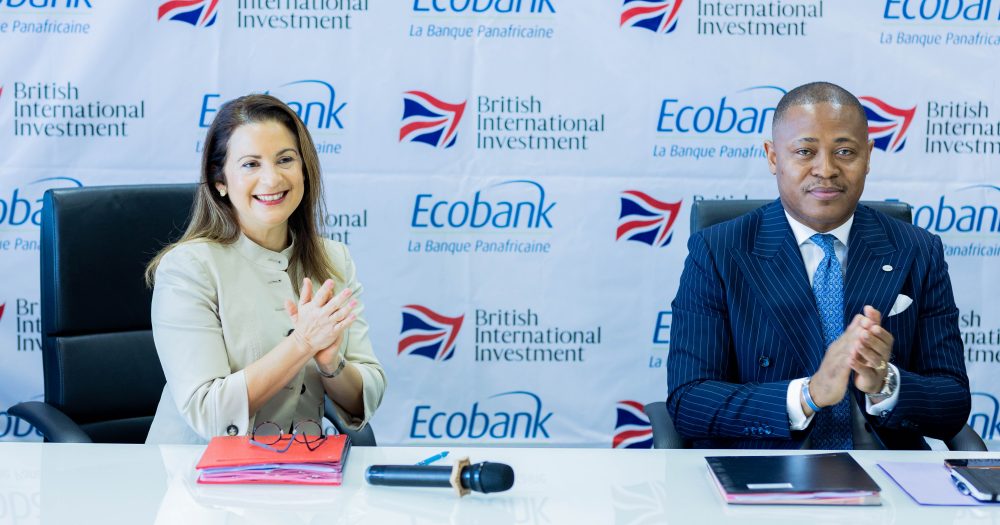
- British International Investment and Ecobank DRC launched a $30 million risk-sharing facility to expand SME lending across the Democratic Republic of Congo.
- The facility will target sectors linked to economic resilience, including agriculture, agro-processing, infrastructure, industrial activity, renewable energy and climate-aligned projects.
- The partnership supports BII’s five-year strategy to direct at least 25% of new investments by value into frontier markets, including UN-defined Least Developed Countries.
Kinshasa is moving deeper into the development finance spotlight as British International Investment and Ecobank DRC launch a $30 million risk-sharing facility aimed at small and medium-sized enterprises across the Democratic Republic of Congo.
The partnership is designed to expand access to credit in one of Africa’s most capital-constrained markets. For many SMEs in the DRC, growth is held back by limited collateral, short lending tenors and restricted access to formal finance. That gap affects more than individual businesses. It limits job creation, supply chain resilience and the country’s ability to build a stronger private sector outside extractive industries.
The new facility will allow Ecobank DRC to increase lending to new and existing SME clients by sharing risk with BII, the UK’s development finance institution and impact investor. By lowering the concentration of risk on the bank’s balance sheet, the structure is intended to unlock longer-term and broader financing for businesses that often fall outside traditional credit thresholds.
Facility Focuses on Real Economy Growth
The financing will target sectors tied directly to the DRC’s economic development needs. These include agriculture, agro-processing, industrial activity, infrastructure, local entrepreneurship, renewable energy and other climate-aligned projects.
For investors and development finance leaders, the sector mix matters. Agriculture and agro-processing remain central to employment and food systems across the DRC, while infrastructure and industrial activity are critical to productivity. Renewable energy and climate-aligned investments also carry growing relevance as African markets seek to expand power access without locking in high-carbon development pathways.
BII said the facility aligns with its new five-year strategy, under which at least 25% of new investments by value will go to frontier markets. These markets, defined by the United Nations as Least Developed Countries, often face persistent barriers to private capital. Those barriers include weaker infrastructure, higher perceived risk, limited financial depth and more complex operating environments.
Chris Chijiutomi, Managing Director and Head of Africa, BII, said: “Small and medium-sized enterprises are at the heart of economic development and job creation in the DRC, yet many continue to face significant barriers in accessing the capital they need to grow. As part of BII’s focus on frontier markets, our expanded partnership with Ecobank will enable greater and longer-term lending to small businesses in the DRC.”

Risk Sharing Becomes a Tool for Frontier Market Lending
The deal reflects a wider shift in development finance. Rather than relying only on direct lending, institutions are increasingly using guarantees and risk-sharing structures to mobilize local banks. This can help deepen domestic financial markets while keeping lending closer to businesses on the ground.
For Ecobank DRC, the facility strengthens its capacity to serve SMEs while maintaining risk discipline. That is especially important in markets where banks must balance development demand with regulatory, credit and governance requirements.
RELATED ARTICLE: Norfund, BII, Finnfund Invest $200 Million into African Forestry Fund
Joel Kabuya, Acting Managing Director of Ecobank DRC, stated: “This strategic partnership with British International Investment represents a major step in strengthening our SME financing capabilities in the DRC. It reinforces our commitment to providing long-term support to the private sector, while applying the highest standards in risk management and responsible finance.”

The structure also places responsible finance at the center of the partnership. For C-suite leaders and investors, that means the transaction is not simply about expanding credit volume. It is about how capital is allocated, monitored and governed in a market where long-term private sector financing remains scarce.
Deal Builds on ARIA Frontier Market Push
This is BII’s second risk-sharing facility with the Ecobank Group, following an Ecobank Sierra Leone investment in 2024. It is also delivered under the Africa Resilience Investment Accelerator initiative, a collaboration launched by BII and co-funded with FMO and Proparco.
ARIA was created to increase investment in frontier markets across Africa, where capital needs are high but private investment often remains below potential. The DRC facility fits that mandate by targeting SMEs that can support local jobs, strengthen supply chains and contribute to climate-resilient growth.
For global ESG and sustainable finance leaders, the transaction offers a practical example of blended development finance in a high-need market. It also shows how risk-sharing can help local banks finance businesses that are too often excluded from formal credit.
The broader significance lies beyond the $30 million headline. In the DRC, where economic potential is vast but financial access remains uneven, SME finance is a governance and development priority. If deployed effectively, the facility could help move more capital into productive sectors while supporting a more resilient private sector across one of Africa’s most strategically important frontier markets.

The ESG News Editorial Team is comprised of veteran financial journalists and sustainability analysts dedicated to providing real-time, objective reporting on global ESG regulations, climate finance, and corporate governance. Our desk monitors daily developments from the SEC, IFRS, CSRD and international regulatory bodies to ensure our 1M+ readers receive accurate, data-driven insights into the evolving sustainable investment landscape. Follow the ESG News Editorial Team for expert reporting on global sustainability standards, ESG disclosures, and climate policy. Access over 10,000 investigative reports and real-time updates.