
US Ends Offshore Wind Leases As $885 Million Shifts To Fossil Fuel Investments
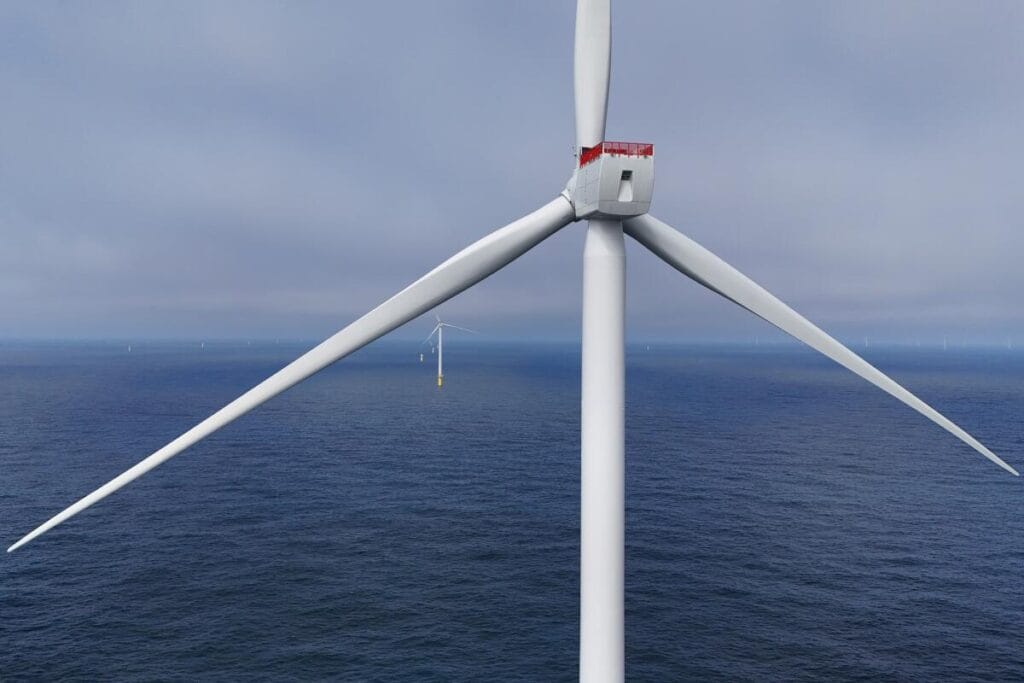
- $885 million redirected from offshore wind leases into U.S. fossil fuel and LNG infrastructure
- Policy shift accelerates pressure on offshore wind while reinforcing domestic oil and gas investment
- Raises questions over U.S. energy mix, investor risk, and long-term climate targets
The Trump administration has moved to terminate two offshore wind leases, redirecting nearly $885 million into domestic fossil fuel investments. The decision affects projects on both the Atlantic and Pacific coasts and signals a sharp pivot in federal energy priorities.
The leases are held by Ocean Winds, a joint venture between ENGIE and EDP Renewables. The projects include Bluepoint Wind, located off New York and New Jersey, and Golden State Wind off California.
The move follows a similar agreement reached in March with TotalEnergies, which redirected $1 billion from offshore wind into U.S. oil and gas development. Together, the deals outline a consistent federal strategy to curb offshore wind expansion while boosting conventional energy supply.
Capital Reallocation Toward LNG And Oil
Under the latest agreement, Global Infrastructure Partners, a unit of BlackRock, will invest $765 million into a U.S. liquefied natural gas facility. This matches the original lease bid for the Bluepoint Wind project.
“We look forward to continuing to deploy capital into conventional and other energy sources in furtherance of the twin goals of increasing U.S. energy independence and affordable energy,” said Salim Samaha, chair of midstream and LNG for Global Infrastructure Partners.

In parallel, Golden State Wind will recover $120 million in lease fees once it commits an equivalent investment into oil, gas, or LNG infrastructure. The Interior Department framed the arrangement as a reallocation of capital toward what it views as more reliable energy sources.
Interior Secretary Doug Burgum said: “Now that hardworking Americans are no longer footing the bill for expensive, unreliable, intermittent energy projects, companies are once again investing in affordable, reliable, secure energy infrastructure.”

RELATED ARTICLE: US Imposes Solar Tariffs Up To 123% On Imports From India, Indonesia And Laos
Industry Pushback And Energy Demand Pressures
The offshore wind sector has reacted sharply, warning that the policy shift could constrain future electricity supply at a time of rising demand.
“We should maximize use of this valuable, domestic resource and pursue a true all-of-the-above energy strategy rather than deliberately limiting our options,” said Hillary Bright, executive director of trade group Turn Forward.
Developers argue that offshore wind remains a critical component of long-term grid stability, particularly as electrification accelerates across transport and industry. The cancellation of late-stage projects could delay capacity additions in key coastal markets.
Corporate Response And Project Impairments
Ocean Winds acknowledged the agreement while pointing to broader uncertainty in the sector. Michael Brown, CEO of Ocean Winds North America, said: “We welcome the opportunity to engage constructively with the administration on this agreement and acknowledge the clarity they have provided with this decision and deal.”
Meanwhile, ENGIE has already paused three U.S. offshore wind projects and recorded financial impairments tied to the changing policy environment. The company has also entered discussions with the administration over potential refunds linked to its lease holdings.
For asset managers and institutional investors, the shift introduces new regulatory risk. Projects that once aligned with federal decarbonization goals now face abrupt policy reversals, complicating long-term capital allocation strategies.
Implications For ESG And Energy Strategy
The redirection of capital from renewables into fossil fuel infrastructure highlights a growing divergence between U.S. federal policy and global climate targets. Offshore wind has been central to decarbonization plans in Europe and parts of Asia. The U.S. approach now places greater emphasis on energy security and cost stability.
For executives and investors, the implications are immediate. First, policy volatility in the U.S. energy sector has increased, requiring more flexible investment frameworks. Second, LNG and traditional energy assets may see renewed inflows as federal support strengthens. Third, renewable developers must reassess timelines, financing structures, and exposure to political risk.
At a global level, the shift complicates alignment with ESG frameworks that prioritize renewable expansion and emissions reduction. While the administration frames the move as a strategy for affordability and reliability, it may slow progress toward net-zero commitments.
The outcome leaves the U.S. energy transition more fragmented. As other regions scale offshore wind, the U.S. is recalibrating its approach, with consequences that will extend across markets, supply chains, and climate policy trajectories.

The ESG News Editorial Team is comprised of veteran financial journalists and sustainability analysts dedicated to providing real-time, objective reporting on global ESG regulations, climate finance, and corporate governance. Our desk monitors daily developments from the SEC, IFRS, CSRD and international regulatory bodies to ensure our 1M+ readers receive accurate, data-driven insights into the evolving sustainable investment landscape. Follow the ESG News Editorial Team for expert reporting on global sustainability standards, ESG disclosures, and climate policy. Access over 10,000 investigative reports and real-time updates.